Thursday Plenary Highlights Vitality, Advocacy, and Connection
By Alison Burdett
Director of Communications
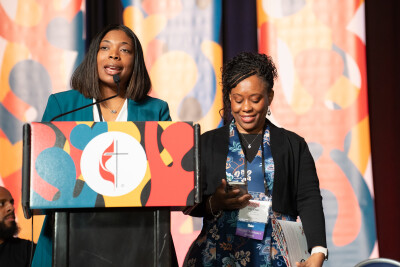 Thursday’s plenary sessions at the Baltimore-Washington Conference Annual Conference resolved the last two remaining resolutions that were not brought before the body on Wednesday, and shared a host of reports, reflecting ministries already bringing transformation across the connection. From collaborative ministry models and advocacy work to youth engagement, congregational vitality, and more, the day consistently returned to one central theme: the church is strongest when it chooses connection over isolation.
The morning plenary began with action on the remaining resolutions that were not brought before the body during Wednesday’s session. Following the presentation of the resolutions and brief clarifying questions from the floor, the conversation resulted in approving both the Resolution to Revamp the Pastor’s Evaluation Form and the resolution to Establish Campus Ministry Sunday. The first resolution calls for the development of a revised pastoral evaluation process that is more supportive, realistic, growth-oriented, and reflective of the full scope of pastoral ministry, including sustainability, giftedness, and shared accountability. The second resolution recommends the first Sunday in May as Campus Ministry Sunday across the Baltimore-Washington Conference, encouraging congregations to raise financial support and awareness for campus ministries serving students throughout the conference area.
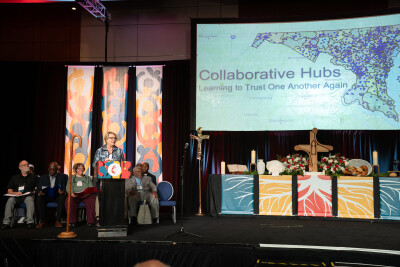 Conference members then heard a report on Collaborative Hubs, where leaders and participants reflected on the growing impact of churches and ministries working together across the conference. Speakers emphasized themes of partnership, trust-building, healing, openness, communication, and shared mission. Hubs are helping congregations move beyond competition and isolation toward deeper relationships and collaborative ministry, with clergy and laity gathering regularly for prayer, discernment, worship, and community engagement. Bishop LaTrelle Easterling affirmed that the work reflects the vision the conference has been “yearning for, praying for, and leaning into” since 2017, celebrating the “coalition of the willing” who are embracing collaboration and helping the conference live more fully as a connected church.
The afternoon plenary opened with the report from the Commission on Nominations, which highlighted ongoing efforts to align leadership structures with the conference’s evolving mission and district configuration. Leaders shared progress in rebalancing agencies and expanding several ministries to function area-wide, including the Young People’s Ministry Board, Leadership Development Board, and Youth Advisory Team. Tracy Collins, chair of the Commission on Nominations, emphasized that leadership is “not just about filling roles, it is about releasing the gifts of the whole body for God’s mission.” The report also celebrated growing engagement among younger leaders and encouraged conference members to discern where they may be called to serve. The leadership report was then voted on and approved by the body.
Conference members next heard a report from Advocacy and Action ministries, which grounded its presentation in scripture and the church’s Social Principles. Rev. Stacey Cole Wilson reminded the conference that advocacy is not separate from faith but “faith in motion,” calling the church to embody justice, compassion, and courageous public witness. The report highlighted the work of social action teams across the conference area, including ministries focused on immigration justice, racial justice, LGBTQIA+ inclusion, gun violence prevention, restorative justice, voting rights, creation care, and intimate partner violence prevention. Wilson emphasized that justice is not a one-time event but a continual practice rooted in discipleship and relationship-building.
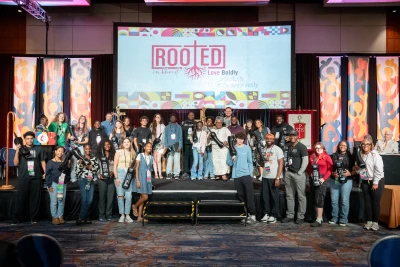 Young People’s Ministries brought energy and hope to the plenary through testimonies, storytelling, and invitations for deeper engagement with children, youth, young adults, and campus ministries. Natiya Bennett, Area Young People’s Ministry Coordinator, highlighted the growing emphasis on intergenerational ministry, encouraging churches to see children not simply as participants, but as contributors to worship and discipleship. A video was shown featuring children from within the episcopal Area sharing when they feel like workship is for them and what they would change in worship. There were audible “aw’s,” laughter, and applause from the congregation, further highlighting that children have valuable insight to share. New initiatives like the Growing Together Network and the Intergenerational Worship Summit were introduced as opportunities to help congregations grow faith across generations. Youth members performed a skit asking the adults in the room, “can you hear us now?” To which the congregation shouted back, “we hear you!” There was reflection on the impact of IGNITE and Camping and Retreat Ministries and young adults shared personal stories of how campus ministry, mentorship, and authentic Christian community shaped their faith journeys and vocational callings.
The plenary featured agency videos from the General Commission on the Status and Role of Women (GCSRW), the General Board of Global Ministries (GBGM), and the General Board of Higher Education and Ministry (GBHEM), highlighting the broader work of the denomination and the connectional nature of United Methodist ministry.
The Office of Congregational Vitality then presented its vision for helping churches become “100% vital.” Leaders outlined four core pillars guiding the work: See All the People, Deepen Discipleship, Live and Love Like Jesus, and Multiply Impact. The Vitality Specialists emphasized that vitality is not about church size, but about spiritual health, discipleship, openness, and alignment with God’s mission. The office described the tools and consultations available to congregations, including Readiness360 assessments, MissionInsite community data, local church consultations, and collaborative partnerships between churches.
Following the presentation, Bishop Easterling spoke candidly to the conference about the resources already available to congregations through the connection. When asked how much congregations must pay to work with vitality specialists, Rev. Bill Brown responded that there is no cost beyond “your time and your willingness to change,” explaining that mission shares make the work possible. Bishop Easterling then challenged the body directly, declaring, “Every congregation is already on a path. You are either on a path to vitality or you're on a path to closure. Which path do you want to be on?”
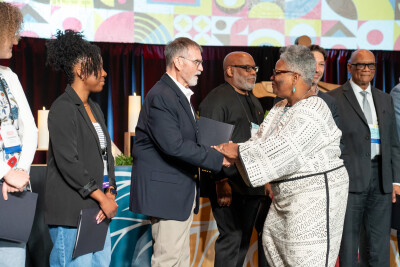 The Board of Ordained Ministry concluded the afternoon plenary by reflecting on leadership, cultural humility, clergy wellness, and the process of preparing candidates for ministry. Co-chair Rev. Paul Johnson reminded the conference that loving boldly requires courageous leadership committed to inclusion, equity, and authentic transformation. Rev. Amanda McMurtrey spoke honestly about the complexity of ministry today, noting that clergy are expected to embody dozens (64 according to a study) of competencies while also learning the importance of humility, collaboration, and self-awareness. The report highlighted initiatives including the Living Well Program, the Clergy Renewal Grant Program, candidacy mentoring, and the work of the Culture of Call team to nurture and support future clergy leaders.
The plenary concluded with the historic questions posed to the candidates who will be ordained on Friday. As candidates affirmed their commitment to faith, doctrine, discipline, and service, the moment served as a reminder that the future of the church depends not only on programs or structures, but on people willing to answer God’s call with courage, humility, and hope.