Laity Session encourages bold love through evangelism
By Alison Burdett
Director of Communications
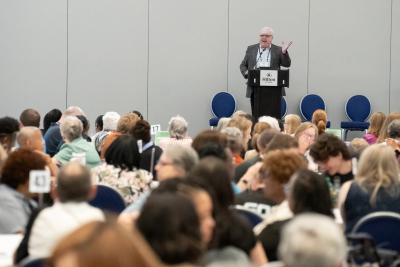 The Baltimore-Washington Conference’s Laity Session gathered lay leaders from across the conference for an afternoon focused on one central question: how can churches boldly share hope in a changing world? Through worship, testimony, conversation and practical teaching, the session challenged participants to rethink evangelism not as pressure or performance, but as relationship, witness and faithful invitation.
The session opened with greetings from Bishop LaTrelle Easterling, who encouraged laity to embrace their role as leaders in a divided world. After leading the room in singing “Happy Birthday” to Ken Willard, the keynote speaker for the laity session, the bishop continued her greeting reminding attendees that the church no longer has room for passive participation.
“We don’t have anything called volunteers in this denomination,” Easterling said. “We are leaders, we are skilled servant workers. We are disciples committed to living out the Gospel message in this time.”
Referencing the conference theme, “Rooted in Christ: Love Boldly,” Bishop Easterling emphasized the urgency of Christian witness today.
“There is no other time in our lifetime like now that we need to be witnessing and modeling and living the Gospel of Jesus Christ in a world that is so divided,” she said. “We need to stand tall and be the hands and feet of Christ in the world.”
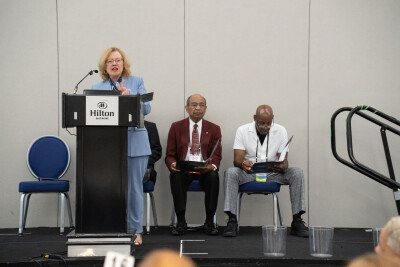 Conference Lay Leader Amelia Duroska welcomed participants and encouraged them to focus especially on the word “boldly.”
“The BWC is doing well, but we have no time to waste in moving ahead, with growing our faith, welcoming new followers and cherishing our current followers,” she said.
Duroska also recognized members of the Conference Board of Laity and celebrated the ministries taking place throughout the districts. One story that drew applause was the testimony of Harbor District Lay Leader Darrell Taylor, who participates in a daily 6 a.m. prayer call that has continued for 12 years, totaling 4,467 consecutive days of prayer.
Keynote speaker Ken Willard is the director of Faith Community Development and Congregational Engagement for the West Virginia Conference and author of Beacon of Hope: Your Guide to Reaching, Witnessing and Welcoming New People.
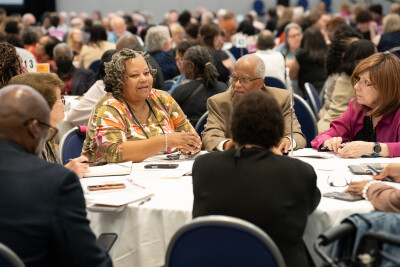 Willard invited participants into table discussions early in the session, asking them to introduce themselves and share how they first came to church. The answers revealed a familiar pattern: most people came because someone invited them.
“The No. 1 way people come to church is the same way in 2026 as it was 50 years ago,” Willard said. “Personal invitation.”
Throughout the workshop, Willard challenged common assumptions about evangelism. He acknowledged that the word itself often carries “baggage” and fear, especially when people imagine approaching strangers or pressuring others. Instead, he reframed evangelism as helping another person move closer to God.
“Anything that you do to help another person move closer to a relationship with God, or into a Christian community,” he said, quoting author Martha Grace Reese, “is evangelism.”
At one point, Willard had attendees turn to one another and say, “You have beautiful feet,” drawing laughter throughout the ballroom as he referenced Isaiah 52:7, “How beautiful … are the feet of the messenger … who brings good news…”
Willard emphasized that evangelism and discipleship cannot be separated. Referencing United Methodist membership vows, prayers, presence, gifts, service and witness, he encouraged churches to teach members what those promises actually mean and to build cultures where witness becomes normal rather than exceptional.
He repeatedly returned to 1 Peter 3:15 as a guiding scripture: “Always be prepared to give an answer to everyone who asks you to give the reason for the hope that you have.”
Rather than memorized speeches, Willard encouraged “relational evangelism” grounded in authentic relationships. Using the story of the friends who lowered a paralyzed man through a roof to reach Jesus.
“Their role was to get their friend to Jesus,” he said. “That is our role today.”
Willard also shared practical examples of churches connecting with their communities through “bridge events,” including one congregation that used its large parking lot to host a free community car show. It wasn’t until months later, that a family visited worship because they remembered the church’s hospitality at the event.
 As the session concluded, attendees reflected on key lessons from the day by writing words or phrases on wooden hearts placed on each table.
“We’re going to have to go out into our community,” shared Mary Diver of Lisbon UMC. “Make our presence known to them.”
Others reflected on the need for adaptability.
“Can’t keep doing things the same old way,” said Lakes District Lay Leader, Angela Fossett. “We have to be flexible.”
The session ended with prayer, a benediction and a final challenge for lay leaders to carry Christ’s hope boldly back into their churches and communities.