Friday morning plenary highlights multitude of ways to ‘Love Boldly’
By Erik Alsgaard
Throughout the Baltimore-Washington Conference, United Methodists are loving boldly. Just how, where, and why was made abundantly clear during the Friday morning plenary session of the Annual Conference.
 In report after report, conference attendees heard how congregations throughout the Area are being the hands, feet, and voice of Christ, offering His love everywhere they go … and sometimes in unusual ways.
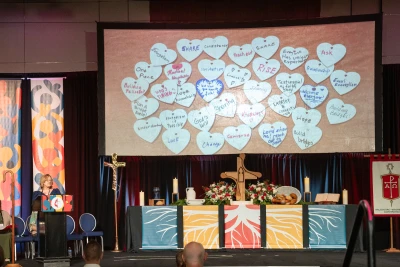
Take, for example, the Laity Report. Conference Lay Leader Amelia Duroska began by sharing an image of various ministry learnings and commitments, written on small notes, gathered from throughout the conference.
“Those words are more than aspirations,” she said. “They are being lived out every day in congregations and communities across the Baltimore-Washington Conference.”
Duroska then highlighted three (out of many) lay-lead ministries in the BWC. She introduced Linda Flanagan, President of the Association of Lay Servant Ministries and Director of Lay Servant Ministries for the Baltimore-Washington Conference, who shared that congregations are using music, creativity, and the arts to build relationships and boldly love their communities.
“At Good Shepherd United Methodist Church, music has long been part of the church’s ministry and witness,” Flanagan said. One creative aspect of this is the Southern Maryland Flute Choir, founded by Lucy Snell, a retired professional flutist and teacher. Began as a fundraiser, the Flute Choir performances are now a much-anticipated community event.
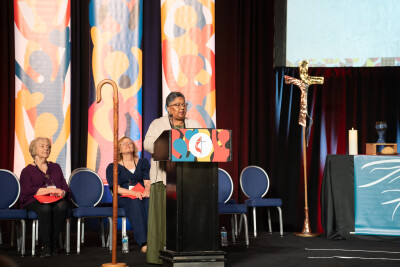 Then Angela Fossett, District Lay Leader for the Lakes District and a Certified Lay Minister serving two congregations, told a story of loving boldly through outreach and service. In 2020, as the pandemic disrupted communities and many ministries paused, the United Women in Faith at Asbury UMC in Annapolis felt called to fill a growing need.
Led by lay minister Yolanda Perry, and after seeing that many children were arriving at school without adequate winter clothing, the women decided to act. What began with 100 coats being given away has grown to more than 300 being distributed last year.
But the real story, she said, is not the coats. It’s the relationships.
“What started with a small team has grown into a network of people committed to ensuring that children know they are cared for,” she said.
Finally, Marsha Purcell, Lay Leader at Centenary UMC in Shady Side, talked about “Messy Church,” an intergenerational ministry that is creating new pathways for belonging, discipleship, and connection at her church.
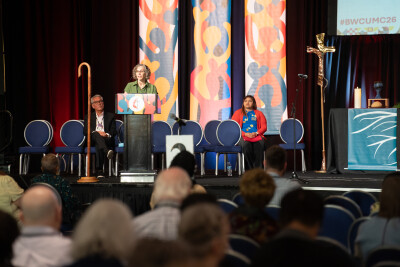 “Each month,” she said, “families and individuals gather for an evening of creativity, service, worship, and fellowship.” They begin with a community activity that introduces a biblical theme, followed by crafts, service projects, and hands-on experiences that help connect faith to everyday life, she said.
“Across our Area,” Purcell said, “churches are discovering that when children, youth, and adults learn, serve, worship, and lead together, faith grows deeper, relationships grow stronger, and communities become more welcoming.”
In the Wellness and Missions report, following a powerful video that testified to the movement of God’s bold love through outreach, compassion, and serving, Annemarie Schaefer, Coordinator of Wellness and Missions, said that people who love boldly often do that simply by showing up.
“We are building a network of leaders across our Area,” she said, “in Wellness and Health, in Disaster Response, in Volunteer Mission teams, and in Missionary support.” She offered an open invitation for United Methodists and others throughout the Area to join in, even if you’re not an expert. “You simply have to say ‘yes’,” she said. “Because the world is hurting. And the Church is called to show up. So… love boldly. And step into the story God is already writing.”
Another important piece of the “Love Boldly” theme was highlighted during the Discipleship Council’s report. Pastor Kris Neale and the Rev. Andre Briscoe, chair and vice-chair of the Council respectively, shared not only the importance of doing ministry, but creating disciples of Jesus Christ in the process.
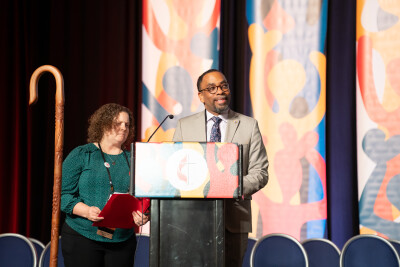 “At the heart of who we are as United Methodists is a simple and powerful calling: to form disciples of Jesus Christ who, empowered by the Holy Spirit, love boldly, serve joyfully, and lead courageously in local communities and worldwide connections,” Neale said. “The question before us is not whether our mission and vision matter. The question is: how faithfully are we living into it right now?”
Together, the pair highlighted various aspects of Missional Alignment Reflection.
“This is a chance for church leaders to pause, pray, listen, and realign around God’s mission,” Neale said. “This is a shared leadership practice of reflection, alignment, and recalibration.”
“Mission Alignment Reflection is not designed to compete with Missional Action Planning (MAP), Vitality Conversations, Readiness360, Catalyst, or other congregational supports,” Briscoe said. “Rather, it is designed to strengthen and connect them.”
This fall, congregations will receive one of two invitations, guided by insights from the 2023 Discipleship Ministries Report, Neale said. Churches that are demonstrating intentional disciple-making practices will be invited into the Mission Alignment Reflection process. Other churches will be invited into discipleship learning, coaching, and training experiences.
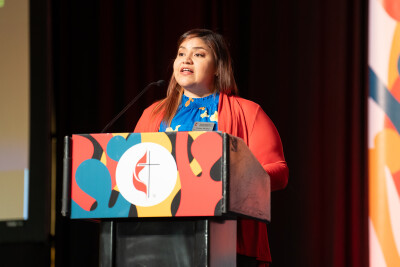 Pastor Cassandra “Cassy” Núnez, the new Area-wide Coordinator of Hispanic/Latine and Multicultural Ministries, then highlighted her ministry area, saying that the purpose of her work is deeply rooted “in the Wesleyan commitment to a holistic Christian faith.”
Within the BWC, there are five communities of faith who are part of the Hispanic/Latine Ministries, she said, “and whose witness continues to embody hospitality, resilience, discipleship, and hope within their local contexts.”
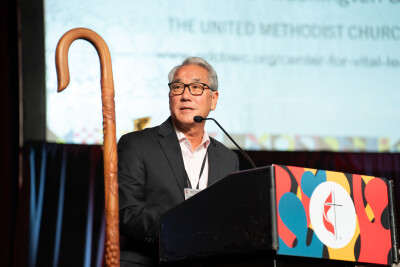 The Rev. Jack Shitama, director of the Center for Vital Leadership, shared information about how his office helps develop lay and clergy leaders who go out into their communities and love boldly.
“Leadership begins within us,” he said. “It expands through relationships, and ultimately helps communities move toward God’s preferred future. We learn to lead ourselves. We grow in how we lead others. And together, we help lead communities through change with courage, hope, and faith.”
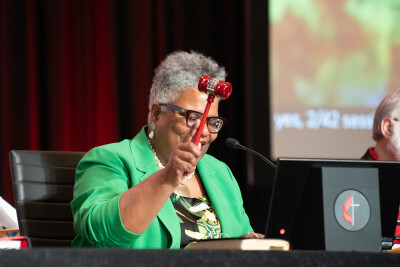 The morning session ended with Bishop Easterling and members of the Appointive Cabinet on stage, introducing full-time clergy who are receiving new appointments starting July 1, along with a lay representative from each church. The bishop then “fixed” the appointments.