Everything flows from discipleship at Bishop’s Days on the Districts
By Alison Burdett
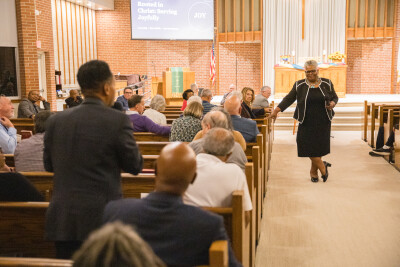 Everything flows from discipleship is the conviction that anchored Bishop LaTrelle Miller Easterling’s Days on the Districts, as clergy and laity across the Baltimore-Washington Conference explored how making disciples of Jesus Christ for the transformation of the world flows into every aspect of congregational life and ministry.
Easterling gathered with the Two Rivers and Tidal Basin districts October 6, Reservoir and Harbor October 7, and Canal and Lakes October 8. Worship, teaching and conversation connected this year’s Annual Conference theme, Rooted in Christ: Serve Joyfully, with the simple truth that everything flows from discipleship.
Readings from Psalm 100 and John 13:12-15 grounded the evenings in gladness and Jesus’ example of washing his disciples’ feet. Easterling explained that sustaining joy requires an ongoing relationship with God, nurtured through prayer and the practices of discipleship.
Reiterating her objection to the word, volunteer, Easterling said, “Volunteers give an hour, but disciples give their lives.”
She urged congregations to reclaim their Wesleyan heritage of covenant groups and loving accountability. All three evenings, she highlighted John Wesley’s 22 questions for self-examination, encouraging honest reflection on faith, habits and relationships.
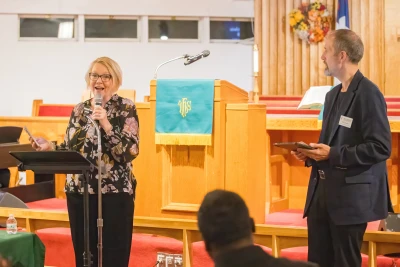 The Rev. Bill Brown, Director of Congregational Vitality, and Christie Latona, Director of Connectional Ministry and Chief Program Officer, explained how Forming Vital Disciples, Mission Alignment Reflection and Missional Action Planning connect.
Their presentation included a sobering reality: in 2023, 72 percent of BWC congregations reported either having no intentional discipleship process or only discussing one. Full calendars and participation in church, they emphasized, do not automatically produce discipleship.
“Jesus never called us to consume the church,” Brown said.
The response draws on four interconnected dimensions of Wesleyan discipleship: devotion, worship, compassion and justice, practiced under the guidance of the Holy Spirit.
Congregations will receive one of two foundational invitations. Forming Vital Disciples helps churches establish or strengthen an intentional discipleship formation practice. Its six-week journey culminates in a personal spiritual rule of life, with alternative formats available.
Like a trellis supporting a vine, that rule provides a structure for growth. Participants continue living into it with accountability and support, revisiting it annually.
Congregations already practicing intentional discipleship formation are invited into Mission Alignment Reflection. Through prayerful reflection, leaders examine how their congregation’s life and ministry align with God’s mission and identify two goals: one to deepen discipleship and another to strengthen community engagement.
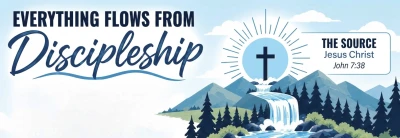 The accompanying flyer illustrates the work. Jesus Christ is the source. Intentional discipleship and mission alignment flow into Missional Action Planning, through which congregations listen to neighbors, build relationships, discern possibilities and steward resources. Vitality is the fruit of the journey. Vitality Conversations help congregations discern their next faithful step.
Audience questions explored how to begin.
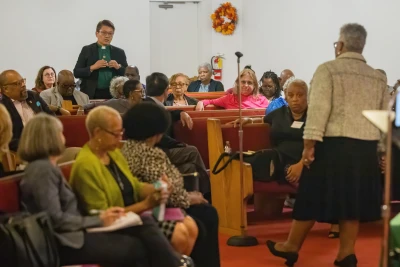 At the Two Rivers and Tidal Basin gathering, a participant asked whether hubs could bring clergy together in accountability groups. Easterling affirmed that covenant groups were already intended to be part of hub life; connecting pastors had experienced a 60-minute model to share.
Another participant asked about engaging young adults who love Jesus but feel disconnected from church.
“Discipleship for young adults needs to begin by listening to them and asking them what would be a meaningful way for them to engage this kind of process,” Easterling responded. “It will look different than what is appealing, or even tolerable to us.” She encouraged leaders to meet young adults where they are and nurture opportunities for deeper engagement, adapting their approach as they learn.
Another participant asked whether clergy spouses could also have covenant groups. Easterling welcomed the idea and encouraged congregations to adapt the resources for spouses and other groups, rather than waiting for conference leaders to design every group. “Take it and shape it, and use it in all of the ways that God inspires you to use it,” she said.
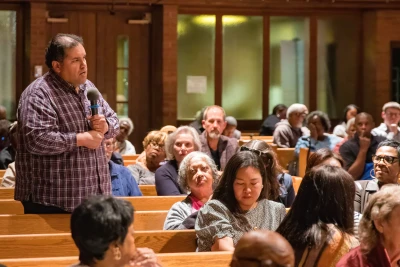 At the Harbor and Reservoir gathering, participants discussed how churches can better welcome and support neurodivergent people, including children and their families. Easterling connected the conversation to Missional Action Planning, encouraging congregations to listen for community needs, identify available resources and pursue the training needed to respond responsibly. She urged churches to make belonging a regular part of worship, Sunday school and mission opportunities.
At the Canal and Lakes gathering, a pastor asked how to encourage commitment when few people attend discipleship opportunities. Easterling urged leaders to teach that discipleship involves active participation in Christ’s work, begin faithfully even with one person and collaborate with neighboring congregations.
Across the evenings, the message remained consistent: everything flows from discipleship.
Connectional news and opportunities
Easterling also shared these updates:
-
Leadership Gathering: Bishop Easterling will attend the Council of Bishops Leadership Gathering October 20-24 in Calgary, Canada, a nonlegislative gathering to listen for the Holy Spirit’s guidance and discern the church’s future. Area participants include Kevin Green, a Peninsula-Delaware Conference layperson; Christian Martine, a Baltimore-Washington Conference layperson; the Rev. Michael Parker, a BWC elder; and Ryan Taylor, a BWC young adult and Towson University student. The Rev. Giovanni Arroyo will attend on behalf of the General Commission on Religion and Race, which he serves as general secretary; he is also a member of the BWC.
-
Regionalization and elections: Worldwide regionalization gives geographic regions equal standing. The U.S. Regional Conference is expected to convene in spring 2029. General Conference meets May 8-16, 2028, in Minneapolis; the BWC will elect five clergy and five lay delegates at its next Annual Conference.
-
Litigation: The October 5 appellate decision affirmed the judgment in the conference’s favor. Easterling also addressed the Calvary UMC lawsuit, affirming her responsibility to protect resources held in trust for the church’s mission.
-
IGNITE: IGNITE meets January 22-24, 2027, in Ocean City. Emerging Voices applications close October 15; IGNITE Squad’s deadline is November 20. Registration prices increase November 1. Campfires are scheduled at Pecometh October 18, West River November 1, and Manidokan November 8.
-
Greece pilgrimage: Journeys of Paul takes place March 6-13, 2027. Registration closes November 11.