
Well Done, Good and Faithful Servant: A reflection on 48 Years of CAMP HOPE
By: Amy A. Willis
Program Director - CAMP HOPE
 It was my dream job.
I got the call - I was offered my dream job.
I had been waiting since I was 14 years old and had my first experience at CAMP HOPE as a camper. I fell in love with every aspect of the program, and as I drove home from my first week of CAMP, I knew I wanted it to be a part of my life for as long as possible. After 3 years as a camper, 4 summers on staff as a counselor, and a few years as an adult leader, I had the opportunity to apply for the position of Program Director. I jumped at the chance. After the interview, I was nervous for days as I awaited the outcome. Driving home from work on 95 one afternoon, I got a phone call offering me the position. I played the game and asked for time to think about it and get back to the Board of Directors with my response, knowing I could not say no. When I called and spoke to my now-husband about the offer and tried to have a conversation about how it would impact our lives, his immediate response was that we would make it work no matter what it took - He knew I had been hoping for this job since my teens. Although I knew the impact the program had on me previously, I never could have imagined how it would shape every aspect of my life.
CAMP HOPE was started in 1977 by Reverend Tom Kaylor. At the time, he was the pastor of Frostburg United Methodist Church and went on a mission trip to help rebuild and renovate homes for those in need. While on the trip, Reverend Kaylor began reflecting on similar needs in the greater Frostburg area, and committed to bringing the program back to Western Maryland. One member of the current Board of Directors for CAMP HOPE has been involved since the program's inception, and she fondly recalls visiting worksites that first summer and handing out popsicles to campers as they renovated houses in the scorching heat. From there, the program steadily grew.
We started staying on campus at Frostburg State University, giving campers the unique and exciting experience of living on a college campus while still in high school. After working on their worksites each day, campers returned to the dorms for a quick shower and change of clothes, then jumped into both structured and unstructured relationship- and community-building. Each evening, the four college-aged counselors led campers in a game or activity, including volleyball, going to the campus pool, kickball, family game nights, family movie nights, and the all-time favorite Capture the Flag. Capture the Flag was the type of controlled chaos that can truly only occur at a summer camp - Picture 60 high schoolers wearing shirts of either black or white, carrying the other, as they trudged across campus towards the Quad, where the combination of wide open space and surrounding buildings created the perfect arena for the high-octane version of hide-and-seek. Others staying on campus that evening would frequently look up into a tree to see an ex-Marine adult leader hiding with black face paint on as he crept his way towards the opposing flag, or notice two giggling teens crawling under bushes in a mediocre attempt to not be caught by their fellow campers.
The game became so intense that it was put on pause for a few summers, much to the chagrin of campers and adult leaders alike!
 While planned activities were foundational to the program, unstructured time in the evening was when friendships and relationships truly flourished. One summer, a church brought a foosball table to CAMP and a full-blown bracketed tournament was born. Two campers from different churches became so close during this summer that they went on to be college roommates and best men at each other’s weddings. One leader was notorious for hosting the largest and longest card games every night, bringing campers from every church together for the evening. And, of course, there were the pranks. Light-hearted and fun-loving campers would plan playful tricks on one another, their adult leaders, and especially the counseling staff. One summer, all of the counselors were brought together and turned into ice cream sundaes, being covered with chocolate syrup, whipped cream, and sprinkles. Another summer, an adult leader came back to her dorm room to find it completely filled with balloons. A counselor had their car gift wrapped for them in the middle of the night, waking up to a large bow and the need to hitch a ride to breakfast. Relationships between campers were forged, fortified, and solidified during these in-between moments of laughter with a bottle of chocolate syrup in hand or casual chatting while waiting for your turn to play foosball.
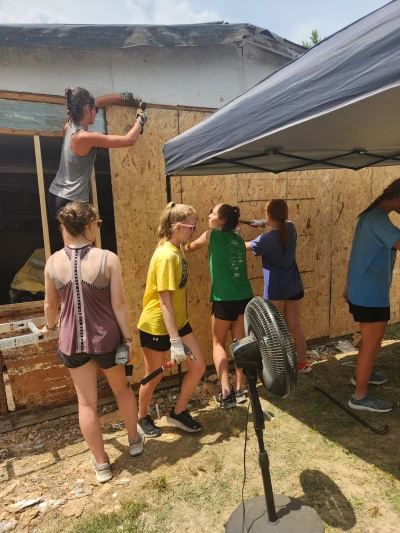
After all of the evening shenanigans, campers were up early each morning for devotions and breakfast. Each day, morning devotions and evening vespers services were held, one planned by the counselors and one planned by the campers. Services were based on a weekly theme and gave campers the opportunity to connect their service work to their faith. After the morning service and meal, campers headed to their assigned worksites. Each team of 5-9 campers was matched with a homeowner for the week and worked with them on approved projects throughout the week. CAMP HOPE is about repairing and rebuilding homes for those who physically or financially cannot do so themselves, and the projects we’ve worked on run the gamut from painting a porch to building a one-bedroom home. This work is vital. Important. Life-changing. On the surface, it looks like the program is just about these construction and repair projects. While that is an element of the program, and while I am not the first or last camper to fall in love with power tools during my tenure at CAMP HOPE, the true focus is on curating and facilitating interactions with others. Building relationships with people you might not otherwise have the opportunity to get to know. Campers are encouraged to take time at their worksites each day to talk with their homeowner and get to know them. Play with their children and grandchildren. Snuggle their pets and hear their stories. Going into the week, the task of painting a porch might seem inconsequential. Then, you meet Mr. Brooks. You learn that Mr. Brooks built the porch when he purchased the house 40 years ago, because his late wife wanted a place to look out over the mountains together while they drank their morning coffee. Mr. Brooks painted the porch 15 years ago for his daughter's prom pictures, the summer before she moved across the country and their interactions were whittled to monthly FaceTime calls. Mr. Brooks was diagnosed with cancer a year and a half ago, and has trouble with the things that used to come easy to him. He is not one to ask for help, and having someone pick him up to drive him to his weekly appointments takes a little chunk of his pride each time. When his neighbor encouraged him to apply, he thought he would give it a shot, but he knew he wouldn’t be selected because it was “just a porch.” Mr. Brooks’ porch is more than a porch to him - It is the background of his life’s movie. Seeing it restored in turn restores him. Being a part of that story is life-changing to all involved, but only if you have taken the time to put down your paintbrush to get to know Mr. Brooks.
We could share so many stories similar to Mr. Brooks', and for many of our homeowners, the projects had far-reaching implications. We have built many handicap ramps to give homeowners a safe way to get out of their homes when their health has necessitated using a cane or wheelchair. We have repaired many roofs, one of which was so degraded that the homeowners had to put a plastic shower curtain over their bed each day in case it rained or snowed, as there was a hole in the roof directly over their bed. One summer, we worked with a homeowner whose only point of egress from their home was an 8-foot ladder, and we provided them with two sets of steps to safely get in and out of their home. We worked with a homeowner who had a hole in their bathroom floor so large that the toilet was balanced on 2 by 4s, and we were able to give them a bathroom they could finally use with peace of mind. The projects we completed over the years brought safety and security to our homeowners in a way they hadn’t felt in too long.
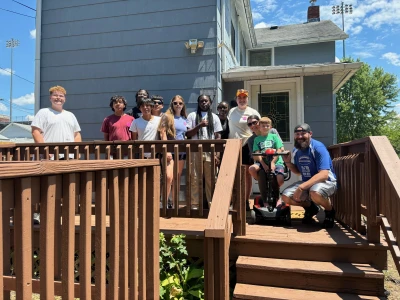 Throughout the 48 years CAMP HOPE was in existence, over 100 churches brought youth and adults to the greater Western Maryland area. Over 3,000 homeowners had a week of their life filled with laughter and smiles, and ended the week with part of their home in a better place than it was before. Thousands of campers had the opportunity to come to Frostburg, enhance their construction skills, and create bonds that last a lifetime. Based on our estimations, we believe about 7,500 campers engaged in the program throughout the years, the majority of whom attended multiple years in a row. When COVID occurred, we lost two years of CAMP HOPE and have been working to build our way back since. Each year, we have had fewer homeowners apply for assistance, fewer campers volunteer to attend, and fewer counselor applications. The Board of Directors has worked tirelessly to continue the program and had to make the incredibly difficult decision that the summer of 2025 would be the final summer of CAMP HOPE. We know the positive impact our program had in Western Maryland, West Virginia, and Pennsylvania throughout the years and are forever indebted to Reverend Kaylor for creating a program where so many people found forever friends, found their faith, and found themselves.
We close each week of CAMP HOPE by singing Pass It On as a reminder to take our good works and share them throughout the year. After spending the week acting as the hands and feet of Christ, we committed together to continue that work in service after leaving our week together in Frostburg. As the CAMP HOPE era comes to a close, the final verse rings truer than ever. I wish for you, my friend, this happiness that I’ve found. You can depend on God; it matters not where you’re bound. I’ll shout it from the mountaintops - I want the world to know - the Lord of Love has come to me. I want to pass it on.
For more information on CAMP HOPE, or to purchase CAMP HOPE t-shirts from years past, please explore camphopemd.com.