More Than a Cemetery: Mt. Zion's Legacy Continues to Bring Healing, Hope and Connection
By Alison Burdett
Director of Communications
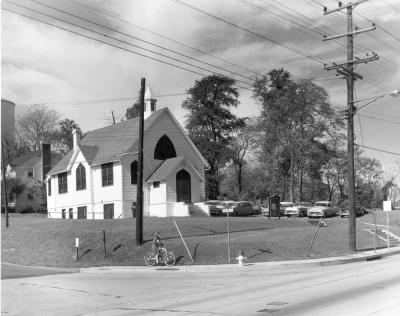
When members of the Baltimore-Washington Conference gathered to reconsecrate the historic Mt. Zion Cemetery in Silver Spring last November, they came to honor those whose sacred resting place had been hidden beneath decades of development.
Eight months later, the work has continued to be about much more than uncovering graves.
 Families are reconnecting with relatives they never knew existed. Lifelong questions about family histories are finally being answered. Memories once thought lost are being shared across generations. And descendants are working together to ensure the stories of those buried at Mt. Zion are remembered with the dignity they deserve.
"This effort has always been about more than archaeology," said the Rev. Will Ed Green, senior pastor of Silver Spring United Methodist Church, who has helped lead the work. "It is about honoring our ancestors, telling the truth about our shared history and helping families find healing and closure. As we do that, we can live into a more just and loving future."
Following extensive ground-penetrating radar surveys, archaeologists identified 129 anomalies that are considered possible or probable graves on privately owned portions of the former cemetery, along with at least 12 additional anomalies within the Maryland State Highway Administration's planned road improvement area. Because ground-penetrating radar cannot definitively identify burials, further archaeological work and consultation are continuing as descendants, church leaders and the State Highway Administration work through the Section 106 historic preservation process. The descendant community continues to advocate for the respectful treatment of the site, including plans for memorialization, archaeological investigation and the protection of any remaining burials.
The work also received an encouraging boost this month when the Wayne M. Goldstein Foundation awarded Silver Spring UMC a $7,000 grant to support archival and archaeological work at the site. The grant will help continue the research needed to document the cemetery's history and guide the next phases of preservation. Looking ahead, archaeological investigation of burials within the project's limits of disturbance is anticipated to begin in October, pending completion of the Section 106 review. Green said the work is expected to be preceded by a service of healing and reparation, marking another important step in honoring those buried at Mt. Zion.
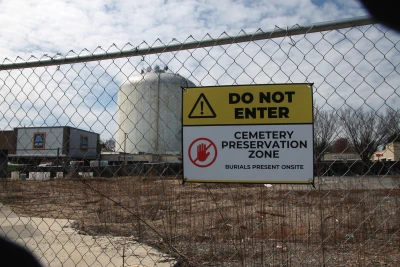 Recent changes to the landscape have also marked a significant milestone. On July 6, the former Montgomery Hills Car Wash, long recognized as occupying part of the historic cemetery grounds, was demolished, opening a new chapter in the ongoing effort to honor those buried there.
For Green, the significance of the site extends far beyond the cemetery itself. "The legacy of this congregation is written across Montgomery County," he said. "Churches like Good Hope Union, Silver Spring, Van Buren, Woodside, Marvin Memorial and Hughes all trace their roots to this community." Remembering Mt. Zion, he said, is also about recognizing the lasting influence of a congregation whose ministry continues to shape communities throughout the region.
That legacy extends beyond the churches it helped establish. During a time when Montgomery County would not provide public education for Black children, Mt. Zion served as a school for formerly enslaved people and Black students. The congregation also organized a mutual aid society to care for neighbors in need and nurtured generations of church leaders, including Bishop Edward Carroll, who worshipped at Mt. Zion while his father served as pastor of nearby Sharp Street Station, now Sharp Street United Methodist Church.
Remembering Mt. Zion, Green said, is not simply about preserving a cemetery. It is about honoring a community whose faith, resilience and ministry shaped generations despite profound adversity.
As descendants continue to uncover the history of Mt. Zion, many say the greatest discoveries have not been made beneath the ground but among the living.
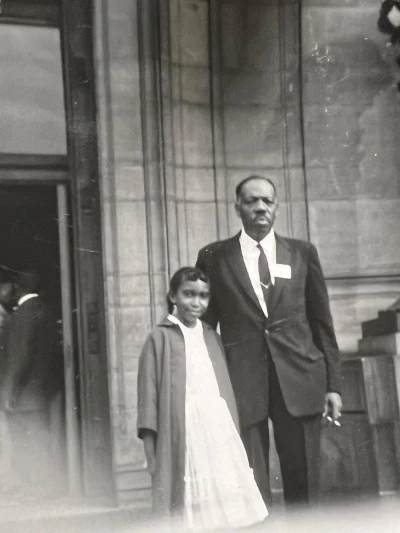 For Brenda Barrington Anderson, whose father, the late Rev. Thomas G. Barrington (both pictured, right), pastored Mt. Zion Methodist Episcopal Church in the late 1950s, the cemetery was woven into the fabric of everyday life.
"It was my playground!" she recalled.
Living in the church parsonage, Anderson remembers simply crossing the driveway from her home into the cemetery, where playground equipment stood among the headstones.
"As I walked among the headstones, many of which were old, even in the mid-1950s, I made up stories about the people who 'inhabited' the cemetery," she said.
Today, watching the cemetery's history come back into public view is both joyful and painful.
"I think, after so many years, the rediscovery of the cemetery is wonderful, and at the same time sad," Anderson reflected. "Efforts being made to honor the cemetery [are] admirable. Future generations should be mindful about protecting people and places they consider important."
For Paulette Dawes, the journey has brought emotions she never expected.
"I personally still feel like I am in mourning," she wrote, "especially after so many questions about my immediate family that I have been seeking on my own, for much of my 60-year-old life, have recently been answered."
Her experience echoes what many descendants have described over the past several months. As church records, archival research and family histories continue to come together, relatives have discovered cousins they never knew they had and found new connections to generations whose stories had been forgotten.
The effort to restore a cemetery has also become an opportunity to restore family histories.
For Walter Powell, the work has become both a search for justice and a gift to future generations.
"My journey began with anger, hurt, and wanting retribution," he said. "The goal is to recognize what has happened, to also tell the story and get my ancestors and others the continued rest, respect, dignity, and memorial site they deserve."
Along the way, Powell's own family has uncovered answers that had remained unknown for decades. Through the research surrounding Mt. Zion, they discovered where his great-grandparents, Harry Williams and Alice Stewart Williams, had been relocated after the cemetery's closure. Their graves are now known to be at Maryland National Cemetery, though they remain unmarked.
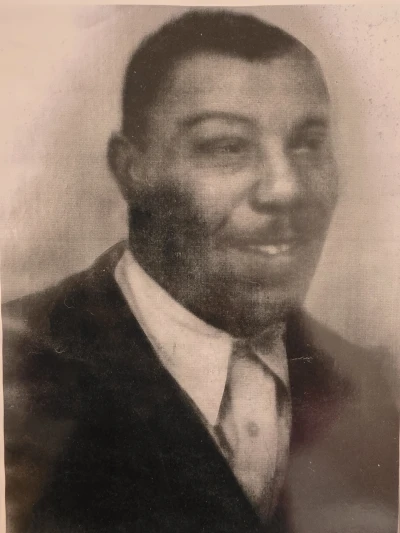
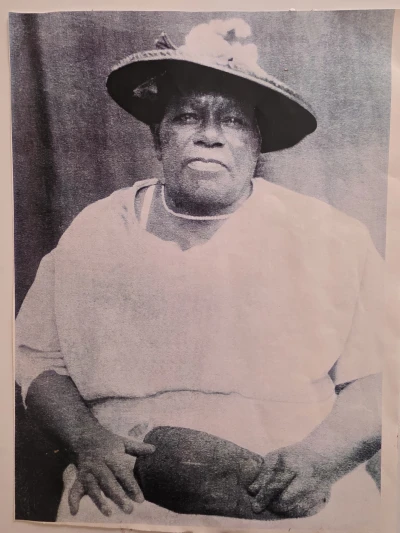
The discovery carried particular meaning because Powell's mother, who grew up in the Linden community, sang in Mt. Zion's choir and knew her father's grave had been moved, but never knew where.
"Now the family knows," Powell said. "My current goal is to stay determined during this journey," he said. "Determined so much that if I'm not here to see it through fruition, the next generation knows this story and the fight that is underway. I've encouraged my daughters to get involved."
One of those daughters is Remi Powell.
For Remi Powell, a young adult descendant involved in the effort, the work has also become deeply personal.
"I felt like I was reconnecting and rediscovering my family's history," she said, after initially hesitating to become involved.
As descendants have gathered, she has been struck by the relationships emerging among families.
"I did not realize how connected some of us are," Powell said. "Some of my ancestors knew some of my fellow Mt. Zion Descendants' ancestors, and that some of us are actually cousins from a long line of our ancestors as well."
Looking through historic photographs has also changed the way she thinks about those buried at Mt. Zion.
"I loved giving a face to their names," she said.
While she recognizes there is still much work ahead, Powell believes the demolition of the former car wash represents meaningful progress.
"This is a significant moment in our journey because, in my eyes, it is the realization and actuality that a building that was once built over our ancestors is now gone," she said. "That brings me a lot of relief and peace."
Her hope extends beyond Mt. Zion itself.
"I truly believe that this will be a catalyst for a bigger movement," she said, encouraging other communities searching for forgotten cemeteries not to lose hope.
Although archaeological investigations, consultation with the State Highway Administration and discussions about the site's future continue, descendants remain committed to ensuring the cemetery is treated with dignity and respect.
They are also seeking participants with research, technical writing and web development experience, along with financial support to assist with legal and archaeological consultation as the work moves forward.
"This is land that people set apart for the glory of God," Rev. Green said. "By honoring those who rest here and telling their stories truthfully, God's glory continues to be lifted up as families find healing and communities remember."
To learn more, offer professional expertise, support the ongoing work financially, or connect with the descendant community, contact Rev. Will Ed Green or Lauriann Duarte.