Intergenerational Worship Summit invites churches to grow together in faith across generations
By Alison Burdett
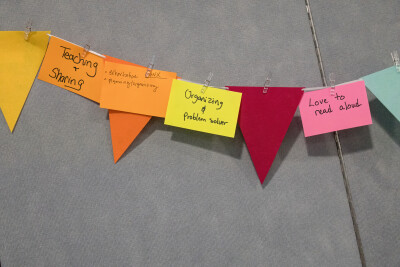
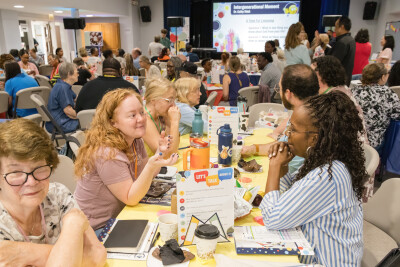 Brightly colored cards dotted the tables at Calvary United Methodist Church in Annapolis, each representing a different generation, from the Silent Generation to Generation Alpha. As participants settled into their seats for the Peninsula-Delaware and Baltimore-Washington Episcopal Area's first Intergenerational Worship Summit on June 27, they weren't asked to introduce themselves by their church, title or ministry role. Instead, they were invited to share the gifts they bring.
One person named a talent for organizing. Another loved decorating. Others spoke of music, reading aloud, listening well or simply encouraging others.
Within minutes, strangers from different generations were experiencing what intergenerational ministry looks like when every person is seen as someone with gifts to offer.
That spirit continued into worship.
Led by Anthony Rogers of Ministry Architects, the Bethany United Methodist Church worship team, and children, youth and young adults from across the Area, the opening service embodied the day's message before a single keynote speaker took the stage. During an intergenerational moment led by Dr. Cathy Vitek, participants were invited into "a time for listening" and asked a simple but profound question:
"What is one thing you know about God from your life?"
As they reflected and then listened to one another's answers, another question followed:
"What do these answers show us about who God is?"
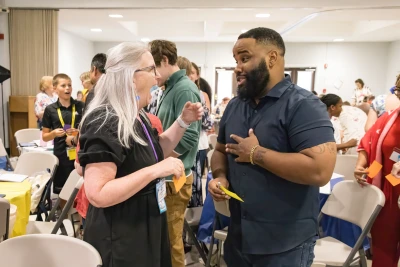 The conversations revealed something powerful. Every person in the room, regardless of age, had experienced God's faithfulness. Every generation had wisdom to share. Those moments of listening, storytelling and discovery set the tone for a day centered not only on learning about intergenerational worship, but on experiencing it.
The summit marked another milestone in Growing Together in Faith, an Area-wide initiative designed to help churches cultivate intergenerational worship through coaching, collaborative learning, resource development and congregational partnerships. Made possible through a grant from Lilly Endowment Inc., the initiative seeks to create lasting cultural change by helping congregations become places where children, youth, adults and older adults participate fully in worship, discipleship and the life of the church together.
Rather than creating another children's ministry program or asking churches to adopt a one-size-fits-all worship model, Growing Together in Faith invites congregations to learn from one another, experiment with new practices and discover how every generation can contribute to worship in meaningful ways.
That vision resonated with attendees like Deaconess Colleen Moskov, director of intergenerational ministries at St. Mark's United Methodist Church in Easton. Because her ministry includes everyone from children in Sunday school to older adults through visitation, she came looking for practical ways to strengthen those connections.
"I'm looking for how to connect those things in really meaningful ways," she said, "so every generation can grow in faith together."
Throughout the day, participants were invited not only to listen to presenters, but also to reflect, discuss and imagine how these ideas could take root in their own congregations. Before the keynote session began, they considered questions such as, "How does intergenerational worship look in your church now?" and "When different generations worship together, it usually feels..." Later, before departing, they were challenged to identify "one small action your church could take in the next month to strengthen connections across generations in worship."
The summit wasn't designed to provide a checklist of ideas. It was an invitation to begin a different way of thinking about worship, discipleship and community.
 The theological foundation for that vision came during morning worship, but perhaps not in the way participants expected.
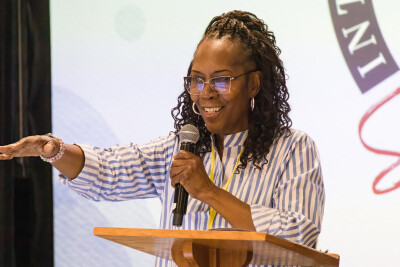
The Rev. Wanda Bynum Duckett stepped to the podium wearing bright green Chuck Taylors. With a smile, she confessed that "little girl Wanda" still lives inside her, even if her body occasionally reminds her how many years have passed. The congregation laughed with her, but the lighthearted moment quickly gave way to a deeper reflection on discipleship, calling and the ways God continues to shape people throughout every season of life.
Preaching from 1 Timothy 4 in a sermon titled Catch These Hands, Bynum Duckett reflected on the relationship between Paul and Timothy and challenged participants to consider an unexpected question:
Who am I in this moment? Am I Paul? Timothy? Moses? Joshua?
For much of her ministry, she said, she understood what it meant to be Paul, offering guidance and encouragement to others. But after retiring in 2025 and then being appointed a year later, she found herself in unfamiliar territory. Although she looked like Paul "generationally speaking," she realized she had become Timothy again, learning from a pastor nearly 30 years younger than herself and stepping into a congregation where she was the newcomer.
"At any given time," she said, "we may be Paul the teacher, and at any given time we may be Timothy the student."
She recalled the many hands that had been laid upon her throughout her ministry. Hands that prayed over her as she entered new appointments. Hands that encouraged her. Hands that reminded her she was never serving alone. Those same hands, she said, are part of God's continuing work across generations, passing wisdom, encouragement and faith from one person to another.
Then she invited participants to do something simple.
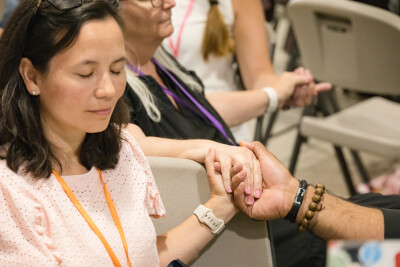 "Look at your hands," she said. "Extend your hand to your neighbor."
Around the sanctuary, hands reached across aisles and generations.
"Catch those hands," she urged. "What God has imparted to you."
Her message became the theological thread woven throughout the rest of the summit. Intergenerational worship is not simply about making space for children or honoring older adults. It is about recognizing that every generation is sometimes called to teach, sometimes called to learn and always called to receive the gifts God has placed in one another.
If Bynum Duckett helped participants understand why intergenerational relationships matter, keynote speaker Dr. Valerie Grissom challenged them to imagine what they can become.
She began with another invitation rather than another lecture.
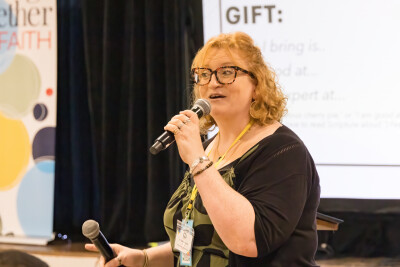 Participants picked up colored cards representing their generation, wrote down the gifts they bring to the church, and then searched the room for someone they had never met from a different generation. Standing shoulder to shoulder, they shared those gifts with one another, discovering that wisdom, creativity, compassion, hospitality and leadership are not bound by age.
It wasn't an icebreaker. It was a picture of the church Grissom believes God is calling congregations to become.
"Intergenerational is not a program," she reminded participants. "It is a spiritual practice."
Rather than asking churches to create another ministry, she invited them to ask a different question:
How can we become more like Jesus by being together?
Throughout her keynote, Grissom returned to three questions she hopes congregations will continue asking long after the summit ended:
- What did you notice?
- Who can we bring along with us?
- How can we be open to the gifts among us now?
 At one point, Grissom invited everyone to stand and move to one of four corners of the room representing where they believed their congregation currently lived on the journey toward intergenerational worship. Some churches clustered together. Others found members of the same congregation standing in different corners, discovering they didn't all see their church in quite the same way. The exercise sparked honest conversations about where congregations are today and where God may be inviting them to grow.
Grissom described the difference between simply having multiple generations in the same room and becoming truly intergenerational. A multigenerational church, she explained, may include every age while each generation stays comfortably in its own lane. An intergenerational church is different. It is a community where people of different ages build mutual relationships, share leadership, learn from one another and leave changed by those encounters.
"Worship tells God's story," she said, encouraging leaders to think beyond attendance or programming and instead focus on participation.
For Grissom, the goal is not worship that keeps every generation equally satisfied. It is worship where every generation becomes an equal and valued participant in what God is doing among the community of faith.
The afternoon shifted from inspiration to imagination as participants spread throughout the church for workshops exploring practical ways to cultivate intergenerational worship in their own congregations.
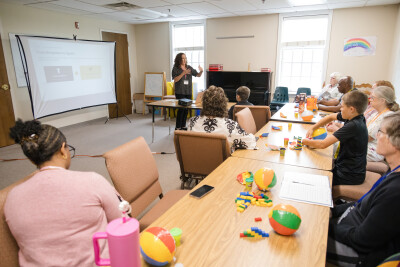 One of those participants was 10-year-old Rhys Filano, who attended the Starting Small: Designing an Intergenerational Element workshop. As one of the youngest voices at the summit, Rhys wasn't simply watching adults talk about worship. He was helping imagine what it could become. One idea he helped develop envisioned inviting worshippers to add a block to a growing tower each time they recognized the work of the Holy Spirit in their lives. Over time, the tower would become a visible reminder that God is continually at work in the community and that every person's story helps build the whole.
The workshop also sparked the imagination of attendee Liz Atwood. Rather than leaving with abstract concepts, she left picturing tangible ways to engage her own congregation. Creating worship experiences where people of every age could contribute instead of simply observe.
"It was fun," Atwood said. "It's something we could use to get everybody involved in the church service."
Those reactions reflected one of the summit's greatest strengths. Participants didn't leave with a notebook full of theories. They left with ideas they could picture using the very next Sunday, along with the confidence to begin, even if the first step seemed small. Again and again throughout the day, presenters returned to the same message: intergenerational worship is not simply about including children in worship or adding another program to the church calendar. It is about recognizing that every generation carries gifts God intends for the whole Body of Christ.
That conviction lies at the heart of Growing Together in Faith.
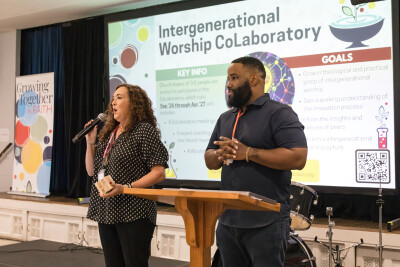 Over the coming months, participating congregations will continue learning through coaching relationships, collaborative cohorts and shared resources, testing ideas in their own contexts and learning from one another along the way.
As the summit drew to a close, participants weren't handed a blueprint for the perfect worship service. They were invited to take one faithful step.
Some left imagining children reading Scripture alongside older adults. Others pictured prayer stations built with Lego bricks or Play-Doh, family worship extending into homes or new ways of listening to the voices of children before planning worship. Many left simply asking how the gifts already present in their congregations might be more fully shared.
The answers will look different in every church. That was the point. Growing Together in Faith isn't inviting congregations to copy someone else's model. It is inviting them to discover what becomes possible when every generation is welcomed not simply as attendees, but as disciples, teachers, learners and leaders in the worshiping community.
As participants gathered their notebooks, exchanged hugs and made their way home, they carried more than workshop handouts and fresh ideas. They left with a renewed vision of the church itself, one where a child's question can deepen an adult's faith, an older adult's wisdom can shape a young leader's calling, and every generation has something to teach and something to learn.
Learn More
Churches interested in participating in the Growing Together in Faith CoLaboratory can contact the Growing Together in Faith team at to learn more about upcoming coaching opportunities, collaborative learning experiences and resources for implementing intergenerational worship.
Additional resources from the summit are available for download: