Imagining a church yet to be: Local voices from a global gathering
By Alison Burdett
Photos courtesy of Area Representatives and Livestream
During opening worship at the Council of Bishops Leadership Gathering in Calgary, Canada, participants were invited to pray the Lord's Prayer in their preferred languages.
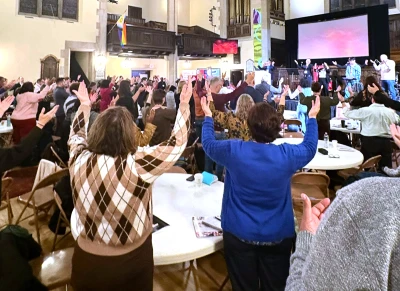 For the Rev. Michael Parker II, a clergy representative from the Baltimore-Washington Conference, the sound of voices praying together in different languages offered a powerful glimpse of the worldwide church.
“The sound of multiple languages being raised to God in prayer at the same time felt like Pentecost,” he said.
That spirit of unity amid diversity carried throughout the October 20–24 gathering, where United Methodist clergy and laity from four continents came together to imagine the church's future.
Under the theme Emboldened by the Spirit: Imagining a Church Yet to Be, more than 280 participants, including those joining virtually, engaged in worship, presentations and small-group discernment. The non-legislative gathering provided an opportunity to identify the church’s challenges, envision new possibilities and offer recommendations for the church's future. Notably, more than one-third of participants were under age 35, reflecting an intentional effort to include younger voices in conversations about the denomination's future.
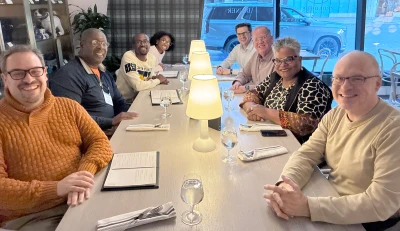 Among those gathered were Bishop LaTrelle Miller Easterling and United Methodists from the Baltimore-Washington and Peninsula-Delaware Episcopal Area, serving in a variety of leadership capacities. They included Kevin Green, a Peninsula-Delaware lay member; Christian Martine, a Baltimore-Washington lay member; the Rev. Michael Parker II, a BWC clergy member; and Ryan Taylor, a Towson University student participating as a young adult member at large. Also attending were the Rev. Giovanni Arroyo, a BWC clergy member and General Secretary of the General Commission on Religion and Race; the Rev. Leo Yates, a BWC clergy member and co-chair of the Disability Caucus; and the Rev. Rick Vance, a Peninsula-Delaware Conference member and General Secretary of United Methodist Men.
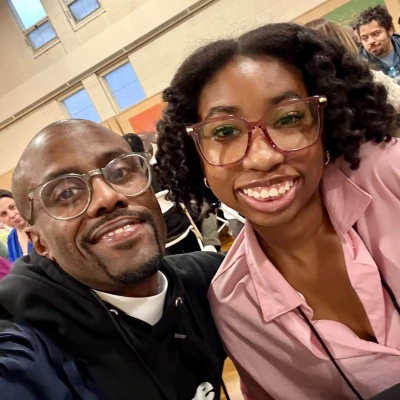
Of the gathering's 15 covenant groups, two included Area participants selected for leadership responsibilities. Parker served as a facilitator, while Taylor served as a recorder. Bishop Easterling expressed pride in their leadership and the contributions of the Area's participants.
For Taylor, the gathering offered an opportunity not only to envision the church's future but to help shape it.
Taylor described arriving somewhat nervous but discovering an unexpected sense of belonging.
“We are all from really different places, but we are all Methodists,” she wrote.
Her stewardship covenant group explored leadership development, mentoring relationships, financial literacy and the use of resources. Taylor believes the Baltimore-Washington and Peninsula-Delaware conferences should consider whether existing resources could be better directed toward strengthening young people's ministries.
One message from opening worship particularly resonated with her. Bishop Rubén Saenz Jr. challenged younger participants: “You are not here to inherit our answers. You are here to ask the questions we stopped asking.”
“I am bringing home the hope that the work we did in Calgary does not stay there,” Taylor said. “I hope that our Episcopal Area will consider new ways to involve our young people and utilize the amazing resources we already have.”
For Bishop Easterling, the gathering affirmed the direction already taking shape across the Living Waters Area, where congregations are being invited to recognize that everything flows from discipleship. But she also returned to a question about what that commitment will require.
“As we deepen our discipleship, are we willing to dream big enough and let go of enough to truly include young people in a transformative way?” she asked.
Throughout the gathering, participants explored five interconnected themes: discipleship, leadership, impact, stewardship and accountability.
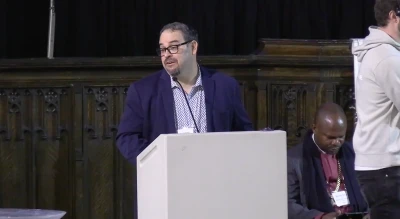 The Rev. Giovanni Arroyo emphasized the importance of empowering laity.
“Discipleship is not primarily the work of clergy but of the whole people of God,” he said. The conversations highlighted the need to equip laity to discover their gifts, embrace their baptismal calling and take an active role in making disciples.
For Parker, the gathering challenged him to think beyond his immediate ministry context.
“What has challenged me thus far is thinking about the work being done for the entire connection and not simply our context,” he said. “This has stretched my thoughts and even my passions.”
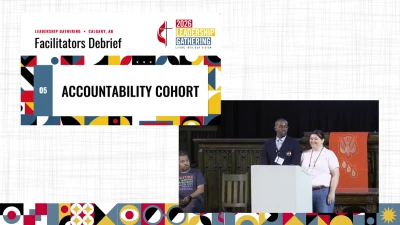 His covenant group identified priorities including keeping Christ at the center of the church's work, welcoming stories from people of all ages and embracing technology as a tool for sharing the Gospel. He also found encouragement in opportunities to build partnerships across conferences and geographic boundaries.
For Martine, a central question was whether the church is measuring what matters most.
“What gets measured matters,” he wrote, observing that attendance figures alone cannot reveal whether people are growing in discipleship. Children, youth and ministries beyond traditional church buildings may also be overlooked by conventional measures of congregational activity.
Martine urged a renewed commitment to Wesleyan social holiness, including the mutual support and accountability once fostered through classes and bands. He described learning about a model of one-on-one spiritual mentoring and wondered how similar relationships might strengthen discipleship today.
“Our current church model makes it easy to consume, but less easy to engage meaningfully,” he wrote.
He also challenged congregations to become less focused on maintaining institutions and more attentive to relationships, community needs and opportunities for ministry beyond church walls.
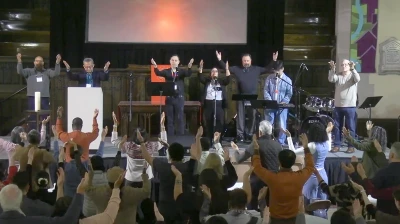 For the Rev. Leo Yates, imagining the church's future means ensuring that people who have historically faced barriers to participation have a voice in shaping it.
Yates appreciated that organizers acknowledged participants unable to attend because of visa restrictions. He connected that recognition with barriers Deaf and hard-of-hearing people encounter when interpreters and other accommodations are unavailable.
He advocated moving beyond simply welcoming people with disabilities toward ensuring their full participation in church leadership and ministry.
“I am bringing home a renewed commitment to building a Church where everyone truly belongs, especially Deaf, DeafBlind, disabled, and neurodivergent people,” he said.
Yates hopes local congregations will dismantle barriers, including ableism and audism, and create opportunities for everyone to serve and lead.
By Friday, covenant groups had developed recommendations ranging from renewed Wesleyan discipleship practices and intergenerational leadership to ministry experimentation, global partnerships and intentional stewardship. The recommendations were shared for further discernment, not adopted as binding denominational decisions.
Arroyo emphasized that moving forward will require experimentation, faithful risks and a willingness to learn from unsuccessful attempts.
“A church committed to renewal must also be a church willing to learn,” he said.
For Taylor, the gathering's lasting impact was found not only in the recommendations but also in the relationships formed along the way.
“One of the speakers said, ‘Holy friendship makes faithful discernment possible,’” she recalled. “My cohort group is a testament to this.”
Across the Baltimore-Washington and Peninsula-Delaware Episcopal Area, ministries are already advancing many of the priorities discussed in Calgary, from intentional discipleship and young people's leadership to inclusion, connection and mission.
Feeling called to help shape the church's future? Consider getting involved:
- Deepen discipleship: Explore Sankofa and the Area's intentional discipleship initiatives.
- Invest in younger generations: Support the IGNITE youth conference and intergenerational ministry opportunities.
- Equip and empower leaders: Explore Lay Servant Ministries, the Center for Vital Leadership and Living Well.
- Build relationships and belonging: Connect with covenant groups through HUBs and learn more about Cross-Racial Cross-Cultural ministries.
- Put faith into action: Engage in creation care, advocacy and wellness and missions.
Explore the Leadership Gathering's plenary recordings, recommendations and additional coverage.