
Allegany County Work Continues
By Alison Burdett
More than a year after floodwaters swept through Allegany County, the work of recovery can be measured in new floors and furnaces, repaired electrical systems and hundreds of hours of work.
But for Derek Matthews, Director of Long-Term Recovery, the most meaningful measure may be a front door.
Last month, an elderly veteran walked through his front door and returned home after being displaced by the devastating May 2025 flood. For Matthews, the moment captured what disaster recovery is really about.
“The real measure of recovery is people,” Matthews said. “It is seeing someone walk back through their own front door. It is watching uncertainty turn into hope. It is helping restore a person’s independence and dignity.”
On May 13, 2025, more than six inches of rain fell in a short period across the mountainous region of Western Maryland. Creeks and rivers quickly overflowed, sending floodwaters into homes, businesses and communities, with Westernport and Lonaconing among the hardest hit.
In February, the Baltimore-Washington Conference reported on the long-term recovery effort, supported in part by a $200,000 grant from the United Methodist Committee on Relief. Because the flooding was not declared a federal disaster, FEMA assistance was unavailable, making the work of state and local governments, UMCOR and other faith-based and community partners especially critical.
Seven months later, the work continues.
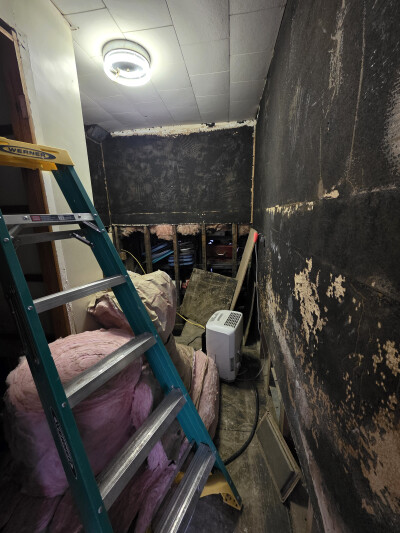 Since February, 26 additional families have been served, bringing the total to 71. Work groups have completed projects at 15 homes, installing subflooring and flooring, remediating mold, replacing windows and doors destroyed in the flood, and repairing electrical systems. Skilled servant leaders have contributed 829 hours, and 21 furnaces have been installed ahead of another Western Maryland winter.
Other projects are considerably more complex. Crews are rebuilding a bridge so one family can once again access their home. Another family is being relocated because their house is no longer habitable. Other homeowners are waiting for electrical, foundation and flooring work.
Consistent skilled servant labor remains one of the Long-Term Recovery Committee’s greatest challenges, Matthews said, while electrical and foundation work are among the most significant unmet needs for families.
The circumstances of Allegany County make the recovery particularly challenging. Approximately 28.3 percent of the county’s population lives at or below 150 percent of the federal poverty threshold, and the recovery team’s assessment found only one person in the affected flood area had flood insurance.
Matthews estimates approximately 100 families or cases still need assistance. The overall recovery timeline remains approximately three years.
That makes relationships as important as repairs.
Matthews has personally reviewed 106 cases and has spent time visiting homes and meeting face-to-face with survivors. Among them was the veteran whose home sustained catastrophic damage when water rose several feet into the first floor, destroying essential systems, floors and walls.
 The man moved in with family and initially attempted to piece together his recovery with limited resources. Through the Long-Term Recovery Group, his heating system was replaced, electrical work completed, and damaged floors, walls and other areas repaired.
But somewhere in the process, Matthews said, their relationship changed.
“We stopped being simply a recovery organization helping a veteran. We became family,” he said.
Matthews went into the work believing the team would bless the homeowner by restoring his house. Instead, “he blessed me just as much, if not more.”
After months of work, the veteran returned to a home Matthews described as “safe, sanitary, warm and his own.”
For Matthews, that experience underscores why long-term recovery requires more than funding or construction crews. It requires presence.
“People’s lives must remain at the center of what we do,” he said.
That commitment extends beyond recovery to helping communities prepare for whatever comes next. The Conference’s disaster response ministry is working with local communities to develop preparedness plans, assemble disaster kits, offer training and strengthen relationships with response partners.
There are also immediate ways United Methodists can help. Mold spray is currently needed for recovery work in Allegany County, and skilled servant leaders, particularly those with skills that can assist with home repairs, are needed to keep projects moving.
More than a year after the flood, the headlines may have moved on. United Methodists have not.
“We can measure recovery in dollars spent, homes repaired, heating systems replaced, electrical systems restored, or cases closed,” Matthews said. “Those numbers are important. But they don’t tell the whole story.”
For one Allegany County veteran, recovery meant finally coming home. And for Matthews, it also meant gaining a friend.
If you'd like to help, please contact Derek Matthews.